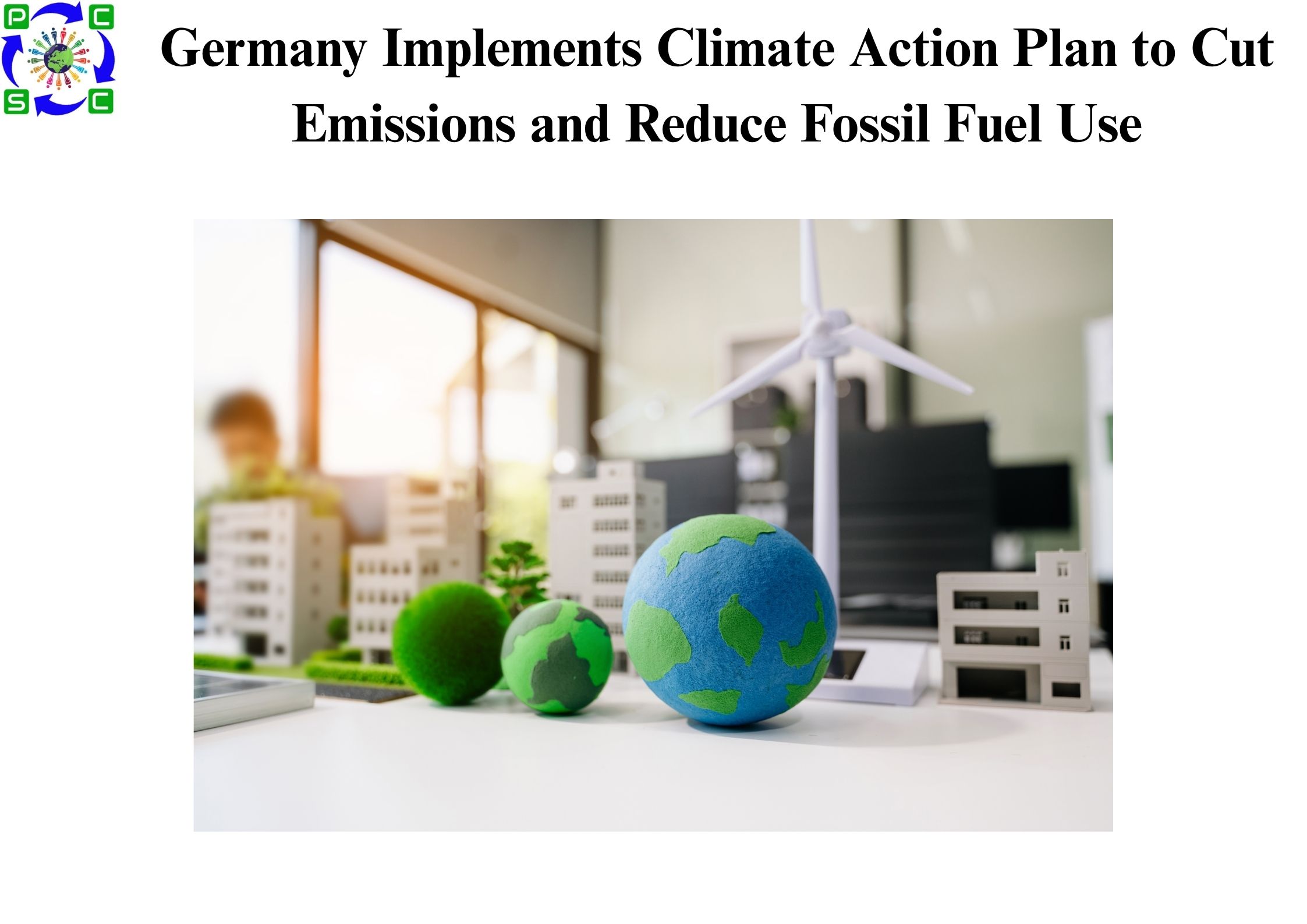
The government of Germany has announced the adoption of its new Climate Protection Program, outlining a roadmap to achieve a 65% reduction in emissions by 2030 (compared to 1990 levels). The plan is supported by €8 billion in investments over the next four years.
The program introduces 67 measures spanning the energy, transport, buildings, and agriculture sectors, and is expected to deliver annual CO₂ savings exceeding 25 million tonnes by 2030. In line with recent trends emphasizing economic competitiveness and rising energy costs, the government highlighted that the plan will also help reduce dependence on volatile global fossil fuel markets, alongside cutting greenhouse gas emissions.
A key initiative includes the expansion of 12 GW of additional onshore wind capacity, which is projected to generate electricity equivalent to 15–20 gas-fired power plants, significantly lowering reliance on coal and natural gas and avoiding 6.5 million tonnes of CO₂ emissions by 2030. The government noted that upcoming tender rounds will support its target of reaching 115 GW of installed onshore wind capacity by 2030.
In the industrial sector, the program promotes decarbonisation of process heat and electrification technologies, such as heat pumps. These measures are expected to reduce emissions by at least 4.3 million tonnes of CO₂, while cutting natural gas imports by 2.5 billion cubic meters.
For transport, the plan includes a €3 billion subsidy scheme for electric vehicles, aimed at improving affordability for low- and middle-income households. The initiative could support up to 800,000 EVs and reduce gasoline consumption by more than 800 million litres by 2030.
In the buildings sector, a new district heating package aims to expand heating networks and increase the use of renewable energy and waste heat, potentially saving around 1 billion cubic meters of natural gas and 2.3 million tonnes of CO₂ by 2030.
The program also outlines measures for agriculture and nature-based solutions, including support for transitioning from diesel-powered machinery to electric alternatives, and initiatives to enhance carbon sequestration through forests, peatlands, and soils.