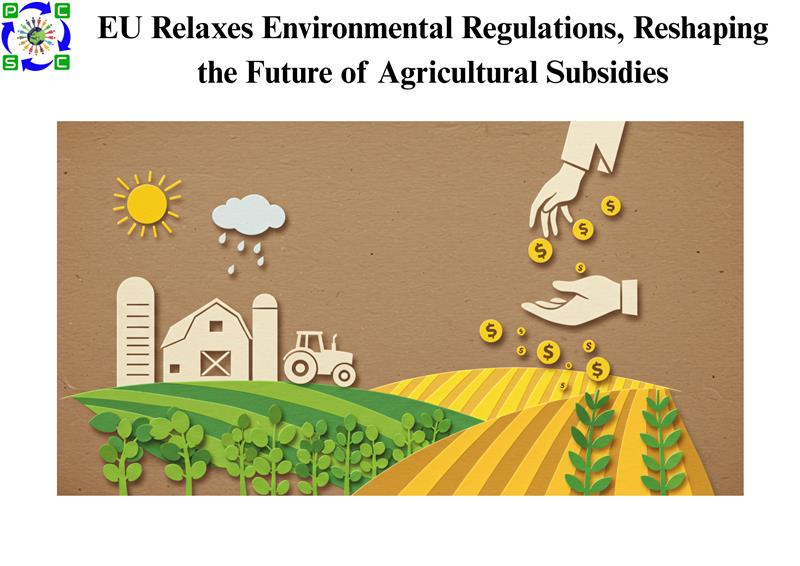
The European Union has approved a reform to its €387 billion Common Agricultural Policy (CAP), easing environmental conditions tied to farm subsidies. The move—brokered between EU member states and the European Parliament—aims to reduce administrative burdens and boost support for small farmers, but critics warn it weakens the bloc’s environmental standards.
Under the new framework, small farmers will be exempt from certain baseline green requirements, such as soil and biodiversity protection, in exchange for higher direct payments. The reform is expected to save farmers around €1.6 billion ($1.87 billion) annually, mainly by cutting compliance checks and paperwork.
The changes follow months of farmer protests across Europe, particularly in France, Germany, Poland, and the Netherlands, where rising costs, strict environmental rules, and competition from cheaper imports have fueled discontent.
Balancing Climate Goals and Rural Stability
The reform forms part of the European Commission’s “simplification omnibus” strategy, designed to streamline policies, cut red tape, and enhance competitiveness against major economies such as the U.S. and China. Policymakers hope the changes will stabilize rural economies ahead of the next EU elections.
However, environmental advocates warn the rollback could undermine Europe’s Green Deal and its 2030 climate targets, given that agriculture accounts for nearly 10% of EU greenhouse gas emissions. Critics argue the reform risks locking in unsustainable practices and weakening resilience to climate shocks such as droughts and floods.
Political and Global Implications
While the agreement still requires formal ratification by the European Parliament and Council, it is expected to pass easily given broad political support. The reform signals a wider policy shift in Brussels toward deregulation and economic pragmatism—a move reminiscent of past efforts in the U.S. to ease environmental rules for competitiveness.
For investors and ESG-focused institutions, the revised CAP raises key questions about the EU’s long-term commitment to embedding sustainability in public finance. As Europe seeks to balance environmental ambition with political and economic realities, the CAP overhaul may offer short-term relief—but could expose the bloc to greater climate and reputational risks in the years ahead