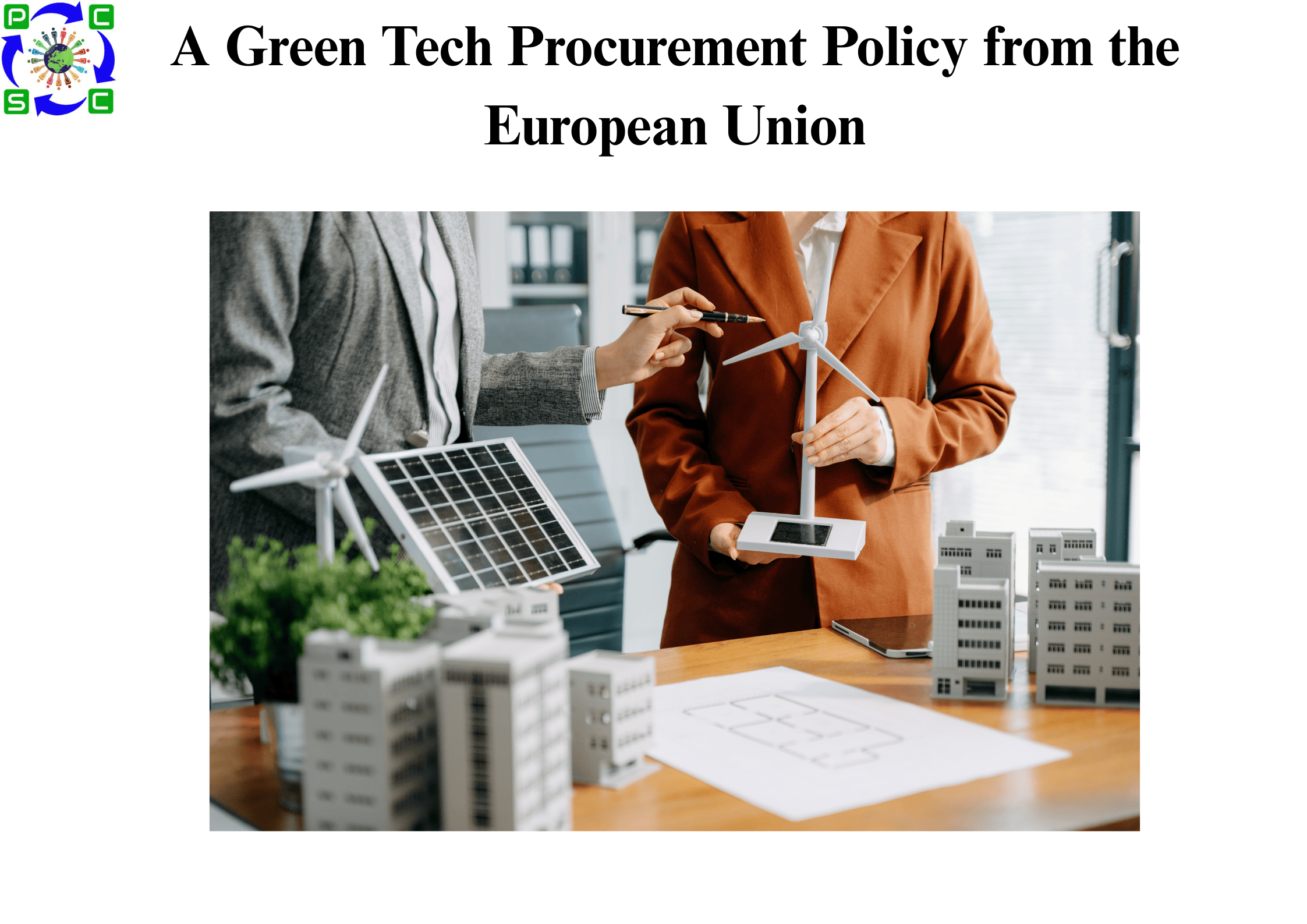
A commission plan would require public procurement of batteries, solar, wind, and electric vehicle components to be sourced from the EU.
Industrial policy, climate change, and geopolitical rivalry with China are linked in a rulebook worth €100 million ($116 million). New localization requirements would apply to foreign investments in strategic areas.
A legislative proposal that would mandate that governments throughout the bloc buy green technologies with a minimum Made in Europe content is being prepared by the European Commission. In the face of growing energy costs and additional tariffs from Washington, the goal is to strengthen domestic supply chains for batteries, solar and wind components, electric vehicles, cables, and charging systems while lowering exposure to Chinese imports and safeguarding Europe's industrial base.
New Battery and EV Procurement Requirements
Twelve months after the law goes into effect, battery systems acquired through public procurement must be manufactured within the European Union. The requirements would cover assembly as well as a few specific parts, such as the battery management system, in the first phase. Criteria would become even more stringent two years after they went into effect by expanding the requirements set by Europe to include more fundamental elements, such as cells. The staged strategy takes into account the sensitivity of global battery value chains as well as industrial capacity.
Electric vehicles and related charging infrastructure would likewise be subject to the Commission's sourcing regulations. Governments purchasing EV charging networks would have to give preference to labor and components made in Europe right away. Brussels wants to preserve Europe's technological advantage in wind turbines and steer clear of past mistakes in the solar industry, where Chinese production accounted for the majority of global value.
A Strategic Alert Regarding Industrial Value Share
Europe's share of global industrial gross value decreased from 20.8% in 2000 to 14.3% in 2020, according to the draft. Concerns that Europe's industrial competitiveness has declined as a result of rising energy costs, growing competition from China, and the United States' new tariff policy were heightened by the fall. The Commission contended that public procurement regulations and green industrial strategy have to be considered components of Europe's geopolitical and economic toolbox.
Investment Screening and Industrial Policy
The plan would include new investment screening standards in addition to procurement regulations. Foreign direct investments above €100 million ($116 million) in specific strategic sectors would not be permitted unless they satisfied localization standards related to EU labor and Europe-made components. This connects supply chain resilience and national security, two issues that have been more prevalent in Western policy frameworks since the pandemic, to industrial policy.
Minimum shares in public contracts for low-carbon industrial products made within the EU were also considered in the proposal. These clauses are similar to those found in the US Inflation Reduction Act, but the European strategy places more emphasis on investment screening and public procurement than on direct tax incentives.