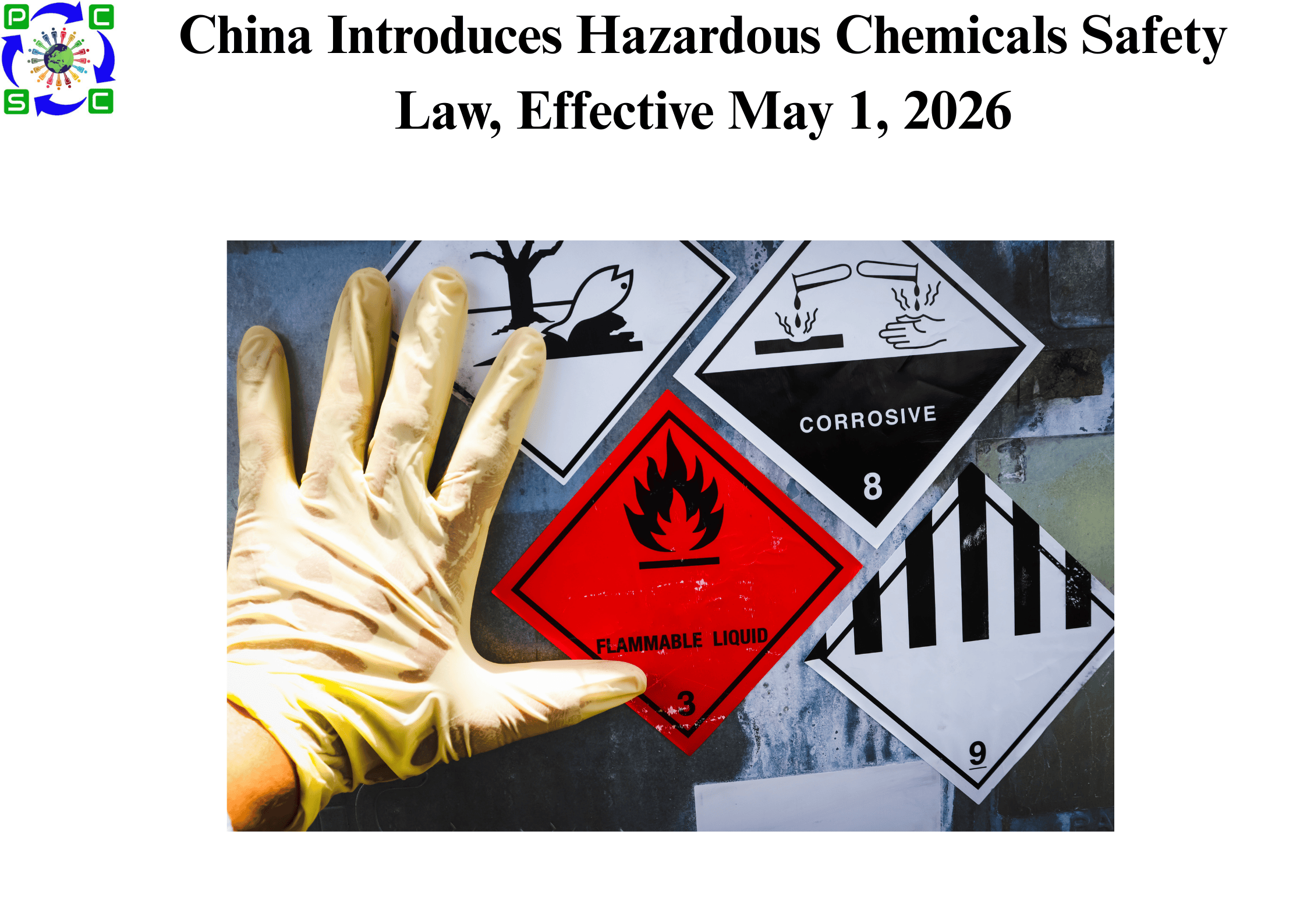
China passed the Hazardous Chemicals Safety Law on December 27, 2025, during the 19th session of the Standing Committee of the 14th National People's Congress. The bill will go into force on May 1st, 2026. There are 127 articles in ten chapters. This law, which goes beyond the long-standing Regulation on the Safety Management of Hazardous Chemicals, is China's first law pertaining to the safe management of hazardous chemicals. Legislative principles, business obligations, permit systems, transportation management, supervisory procedures, and legal liabilities are all greatly strengthened by the new law.
Regulated Companies
Businesses that produce, store, transport, and use hazardous chemicals are subject to the regulation; this includes makers of chemicals, manufacturers of pharmaceuticals, and logistics firms that handle hazardous chemicals.
Significant Modifications from the Prior Regulation
-
Hazardous Chemical Definition
The law adopts a definition based on chemical attributes, encompassing highly poisonous chemicals as well as substances with toxicity, corrosiveness, explosiveness, flammability, or oxidizing qualities that endanger people, buildings, or the environment. No organization or person may produce, store, use, handle, or transport a chemical without permission if its dangerous qualities have not yet been established.
Producing or utilizing new chemicals with potential hazards—even if they are not listed—may result in operations suspension, penalties, or even criminal culpability due to the change from a list-based to a property-based approach.
-
Safety Obligation
All employees, from front-line employees to top managers, are accountable, not just executives.
-
Corporate Responsibility
Establishing a dual prevention mechanism for risk management and hazard identification, strengthening standardization and digitization of safety procedures, and putting in place a thorough safety responsibility system are all requirements for businesses that handle hazardous chemicals. The company's hazardous chemical safety operations are entirely the responsibility of the principal managers. It is not enough to just display regulations or create paperwork; safety management systems must be upgraded methodically.
-
Disclosure System for Safety Assessment Reports
The law increases the requirements for public access to safety assessment reports. Every three years, businesses that produce or store hazardous chemicals are required to commission institutions that meet state standards to perform a safety assessment of their production safety conditions and create a safety assessment report.
-
Industrial Parks
Chemical industrial parks are now legally regulated for the first time. Except for initiatives connected to other industries or those that satisfy national regulations, new or expanded hazardous chemical production projects must be situated within such parks. Except for service providers that assist chemical corporations, non-chemical businesses are not allowed to enter chemical industrial parks. Safety inspections for projects outside of designated parks may be unsuccessful, and current projects may have to be moved or closed.
-
Licenses
Production, handling, and usage are now all covered by the permit system. A safety-use permit is required for businesses that utilize hazardous chemicals in quantities or types greater than those specified.
-
Precursors of Explosives and Highly Toxic Chemicals
Permits or certifications are required by law for the purchase or sale of extremely hazardous chemicals or chemicals used in the production of explosives. Online transactions and sales to individuals are forbidden. Companies are now required to verify, document, and keep transaction information for a minimum of three years, as opposed to the prior requirement of one year.
-
Penalties and Legal Responsibility
The law establishes a framework that combines more severe sanctions for serious consequences with preventive actions. While crimes involving major responsibility or serious workplace safety accidents impose severe punishments when occurrences result in significant repercussions, the crime of hazardous operations targets high-risk illegal actions prior to accidents. Significant administrative fines, suspension orders, remedial actions, and qualification limits are imposed on key and directly accountable staff.