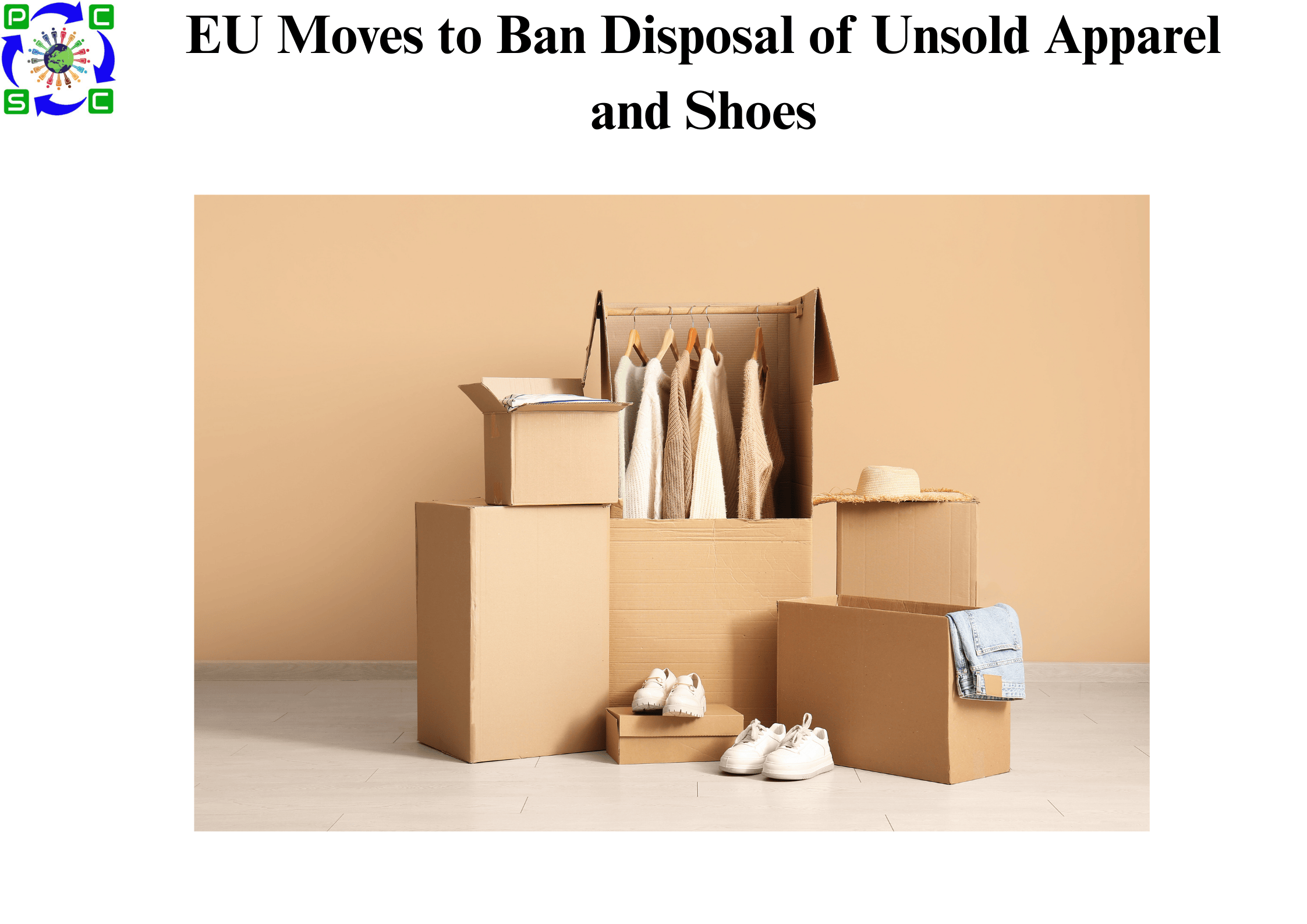
A restriction on the destruction of unsold clothing, accessories, footwear, and other items is one of the new regulations the European Commission declared would be implemented under its Ecodesign for Sustainable Products Regulation (ESPR).
The new regulations come after the EU's ESPR rule was adopted in 2024, which gave the Commission the authority to impose ecodesign specifications on goods in order to increase their environmental sustainability. Product durability, reusability, reparability, the use of materials that hinder circularity, energy and resource efficiency, recycled content, remanufacturing and recycling, and the carbon and environmental footprints of products are only a few examples of the wide variety of sustainability issues that may be covered by requirements.
In 2025, the Commission issued a list of products such steel and aluminum, textiles (especially clothing), furniture, tires, and mattresses that should be given priority for new ecodesign regulations and energy labeling during the next five years. According to the Commission, the categories were selected on the basis of their capacity to promote the circular economy.
The Commission claims that the new regulations are necessary because internet purchasing practices are making the 4-9% of unsold textiles that are destroyed in Europe before they are even used worse.
The new regulations are intended to "help cut waste, reduce environmental damage, and create a level playing field for companies embracing sustainable business models," the Commission continued, noting that the destruction of unsold textiles results in around 5.6 million tons of CO2 emissions annually.
Large businesses will be prohibited from destroying unsold clothing, accessories, and footwear starting in July 2026 under the new ESPR regulations, with medium-sized businesses set to follow suit in 2030.
The new regulations, which go into effect in February 2027, also mandate that businesses reveal details on unsold consumer goods they throw away as trash and establish a uniform reporting format.
Additionally, the Commission stated that it pushes businesses to handle refunds, better manage inventory, and look into options like resale, remanufacturing, donations, and reuse. The measures also specify under what conditions—such as product damage or safety concerns—product destruction will be allowed.