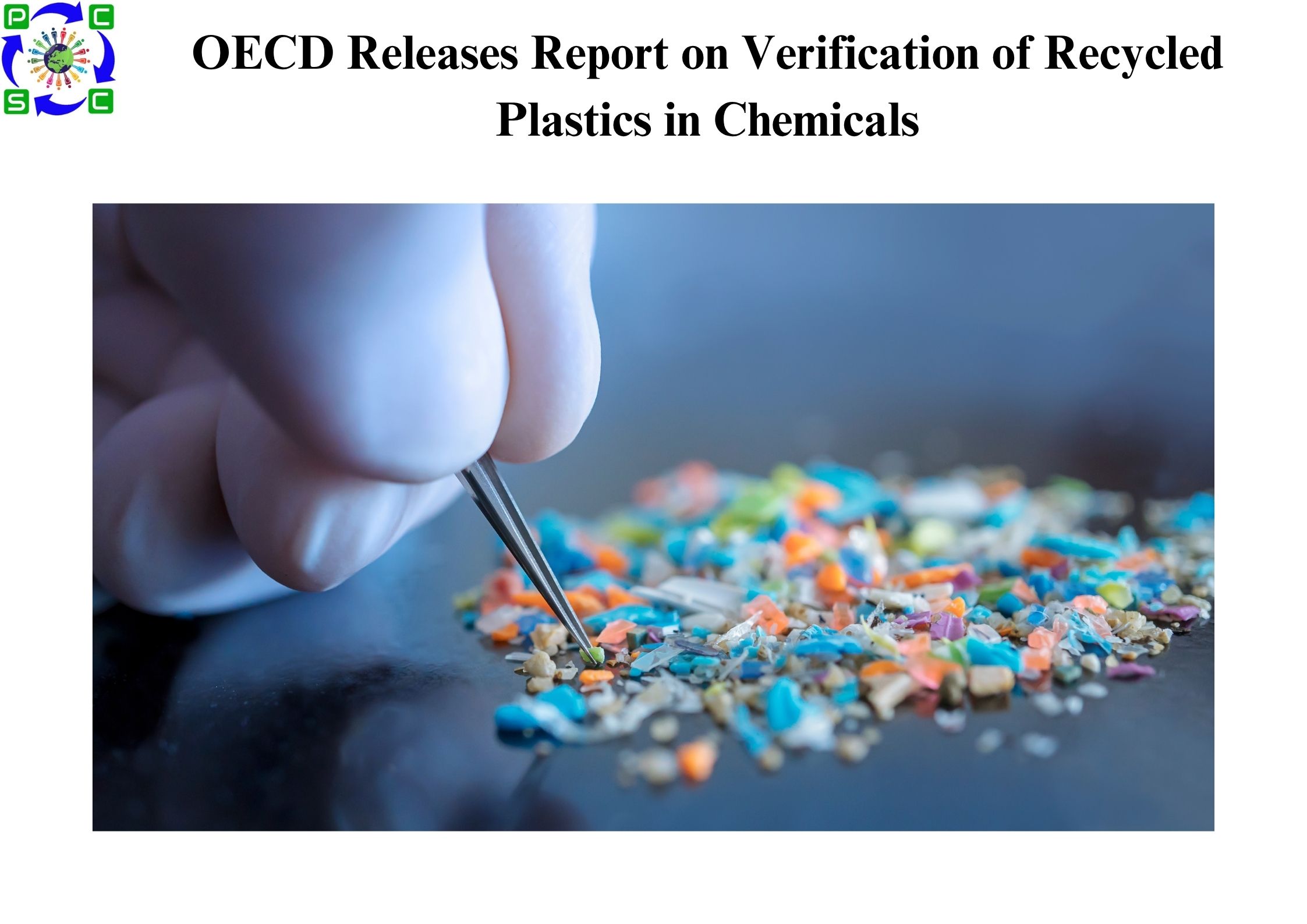
In April, 2026, the Organisation for Economic Co-operation and Development (OECD) published a report under its OECD Series on Risk Management of Chemicals, focusing on the verification of chemical substances in recycled plastics. The report reviews current methods for identifying hazardous substances and additives in recycled plastics and examines related policy approaches.
According to the OECD, residual hazardous additives remain one of the key obstacles to advancing plastic recycling, highlighting the urgent need for internationally harmonized verification standards.
The report outlines existing standards, certification systems, and quality management frameworks used for recycled plastics, while also assessing analytical techniques applied to evaluate chemical composition. It identifies several major challenges, including limited transparency and traceability across supply chains, inadequate removal of hazardous substances during recycling, and constraints in testing capabilities.
A major concern highlighted is the presence of non-intentionally added substances (NIAS), which are difficult to detect and assess due to the complex chemical composition of recycled materials. The report notes that recycled plastics may contain thousands of potentially relevant chemicals, including additives, contaminants, degradation products, and impurities.
To address these challenges, the OECD recommends a combination of upstream and downstream policy measures. Suggested actions include reducing hazardous chemicals during product design, improving separate collection systems, promoting closed-loop recycling, enhancing chemical disclosure requirements, and introducing digital product passports to strengthen traceability.
The report also emphasizes the need for internationally aligned analytical standards, stronger research collaboration, improved chemical databases, and financial support mechanisms to strengthen analytical capacity.
In conclusion, the OECD states that achieving safe and sustainable plastic recycling will require an integrated approach combining harmonized standards, reliable testing methods, chemical traceability, economic incentives, and international cooperation. Such measures are considered essential for increasing recycling rates while supporting the transition toward a safe circular economy.